

Mosaic Art
More valuable, striking, meaningful, and enduring.

Mosaic is among the oldest and most significant art forms in European art history. During the Middle Ages, no other artistic medium was considered more valuable, visually striking, or symbolically expressive than the mosaic.
Its ability to imitate the color spectrum of a rainbow and to evoke transcendent spheres through shimmering golden tesserae granted it an extraordinary reputation.
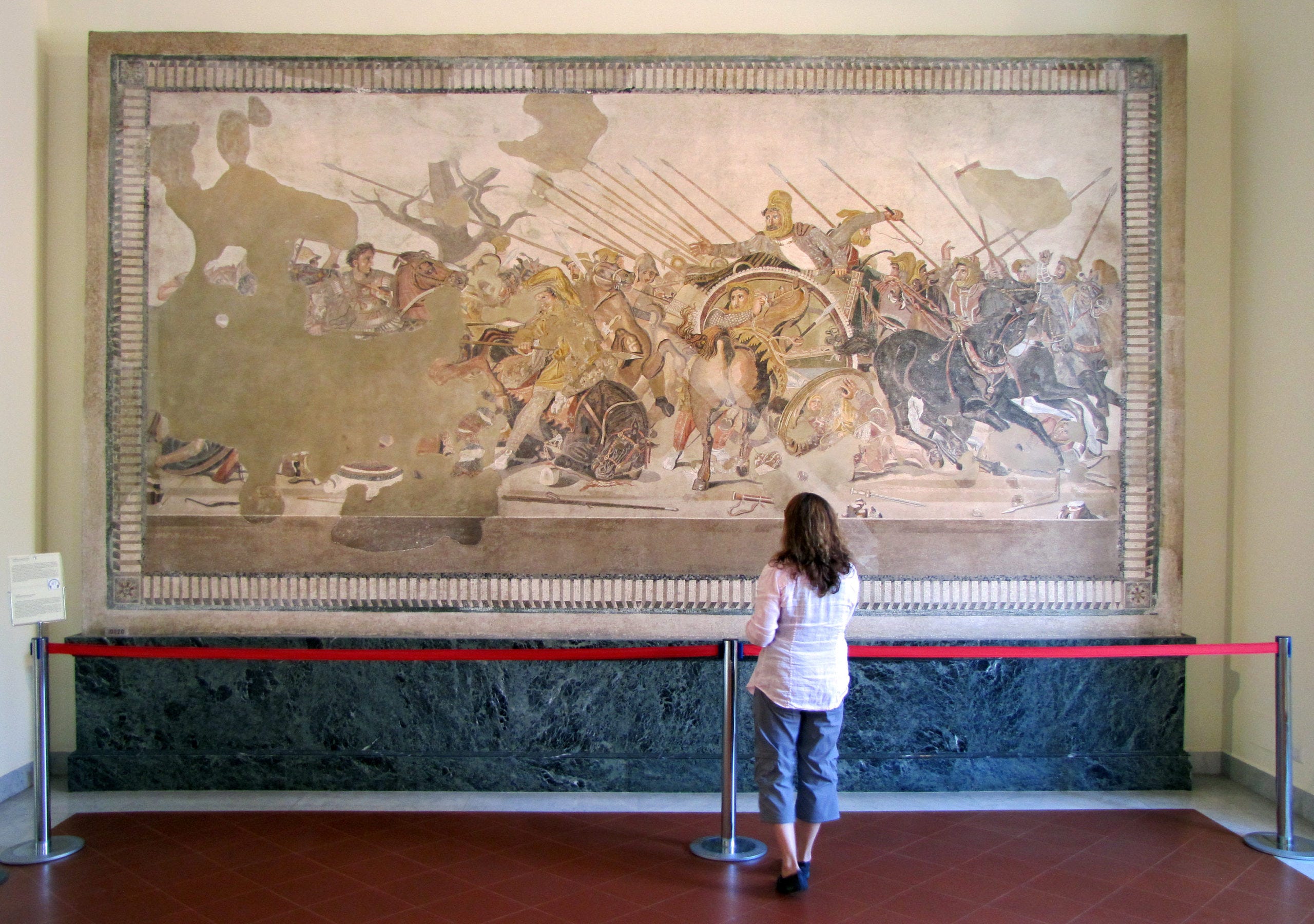
The Alexander Mosaic from the House of the Faun in Pompeii is regarded as one of the most famous ancient mosaics in the world. Created during the Roman Imperial period, it represents a copy of a Greek painting from the 4th century BCE.
The mosaic measures approximately 5 × 3 meters and consists of more than 1.5 million tesserae. It depicts the battle between Alexander the Great and Darius III with remarkable historical detail and dramatic intensity. This monumental work represents the pinnacle of Roman floor mosaic art and demonstrates extraordinary perspectival skill as well as sophisticated compositional techniques that remain unsurpassed.
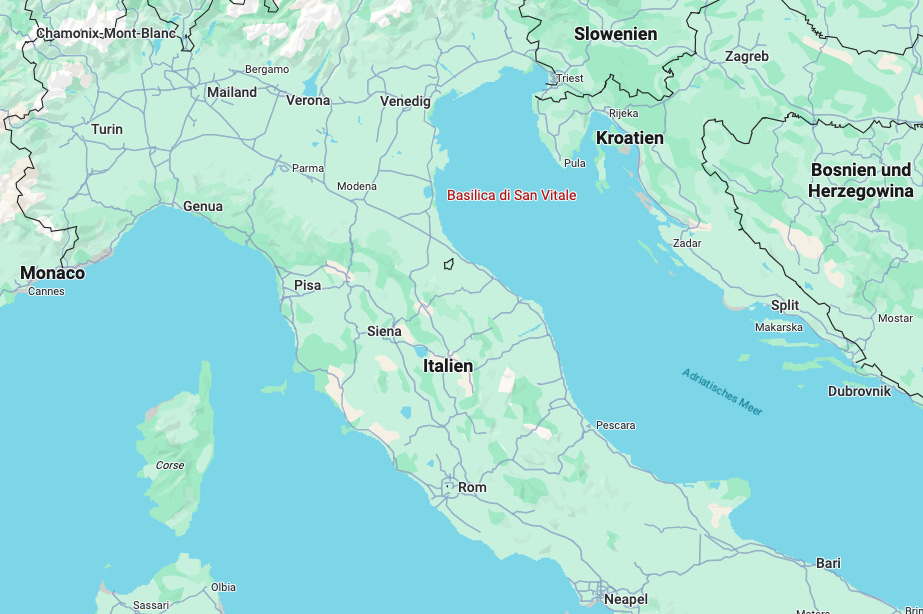
The Byzantine mosaics in Ravenna, particularly those in San Vitale, belong to the most important surviving examples of early Christian art. Ravenna served as the capital of the Western Roman Empire from 402 to 568 CE and later became the center of the Byzantine Exarchate.
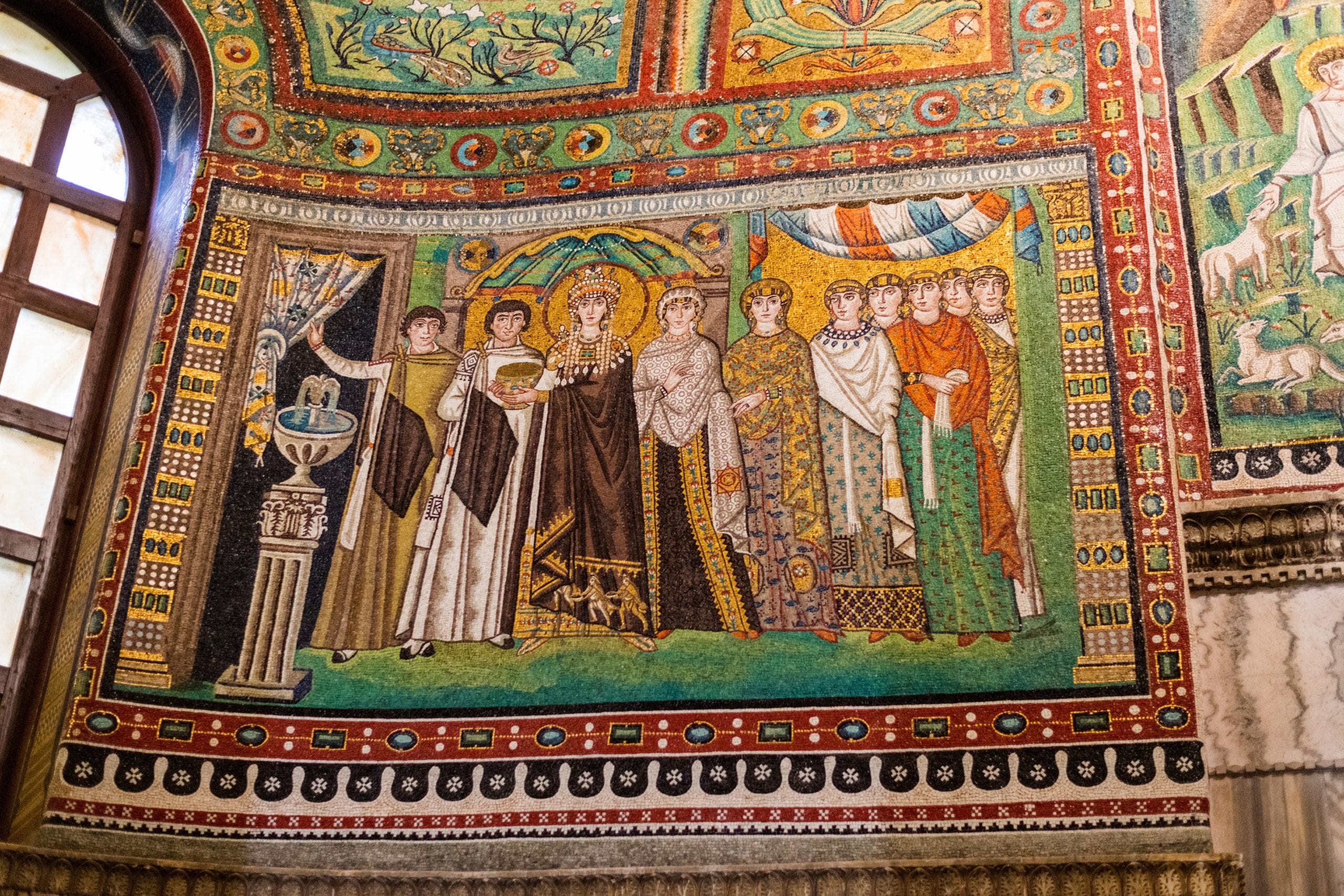
The mosaics depict Emperor Justinian and Empress Theodora against magnificent golden backgrounds. These gold mosaics with religious motifs demonstrate Byzantine mastery in the use of smalti (glass tesserae) and the artistic staging of imperial power through precious mosaic compositions. The frontal representation and stylized, spiritualized figures embody the transition from ancient naturalism to medieval iconography.
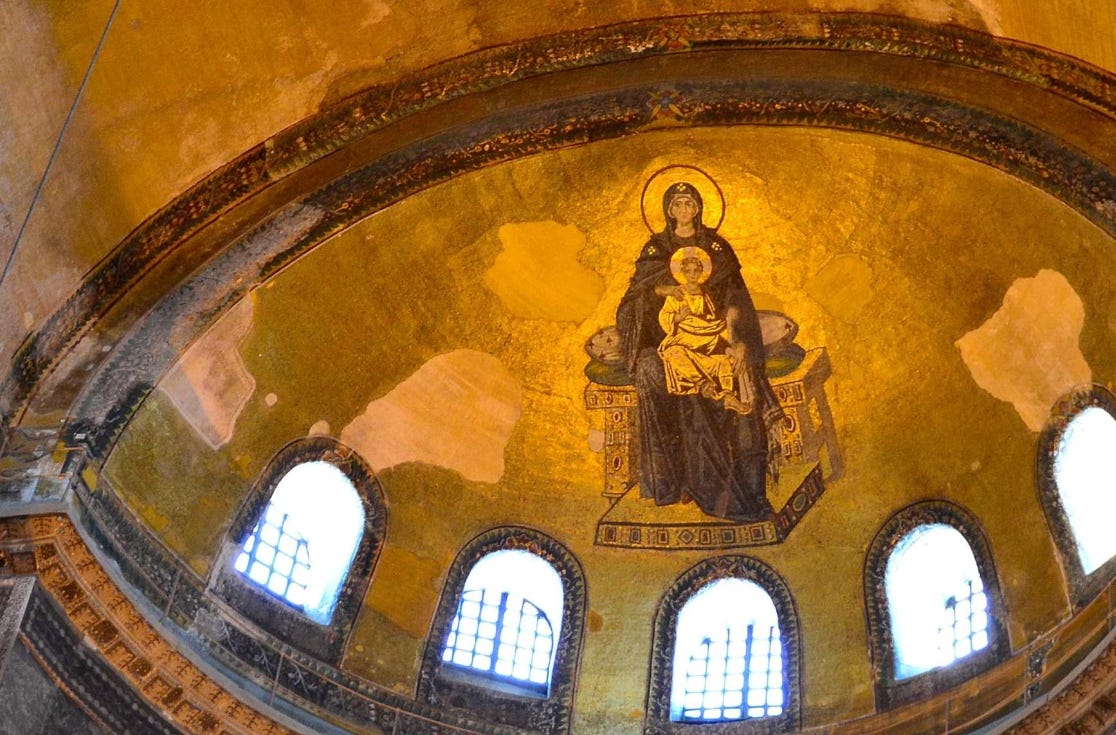
The Hagia Sophia in Constantinople (today Istanbul) was the largest church in the Christian world and a flourishing center of Byzantine mosaic art. Magnificent mosaics of Christ and the Virgin Mary with golden backgrounds dominate the interior decoration.
The use of shimmering golden tesserae elevated the status of mosaics and made them particularly suitable for the visual evocation of the divine sphere. These mosaics represent the height of Byzantine artistic achievement and the union of imperial authority with religious spirituality.
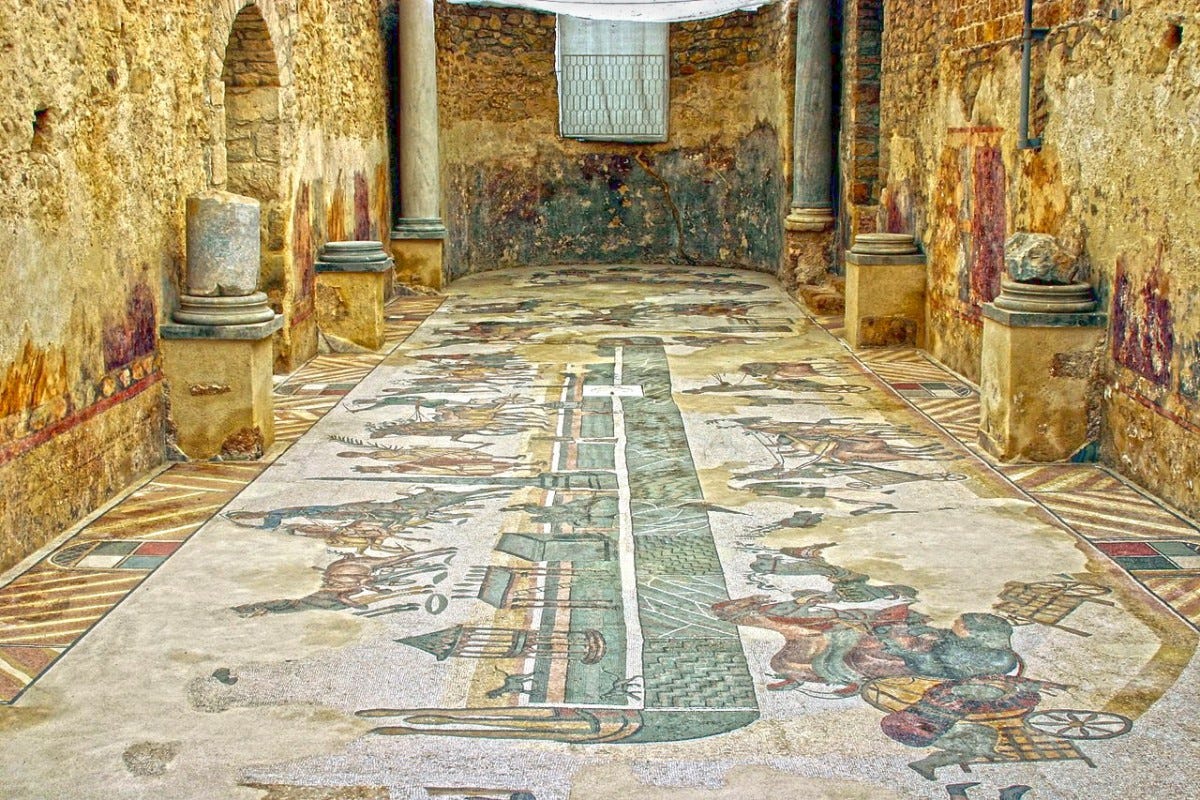
The Villa Romana del Casale in Sicily is a UNESCO World Heritage Site and contains the richest and best-preserved Roman mosaics in Europe. Colorful scenes of hunting, everyday life, and mythology fill the rooms of the villa.
These floor mosaics demonstrate exceptional versatility in the depiction of animals, Amazon battles, and mythological scenes with remarkable detail and vibrant coloration.
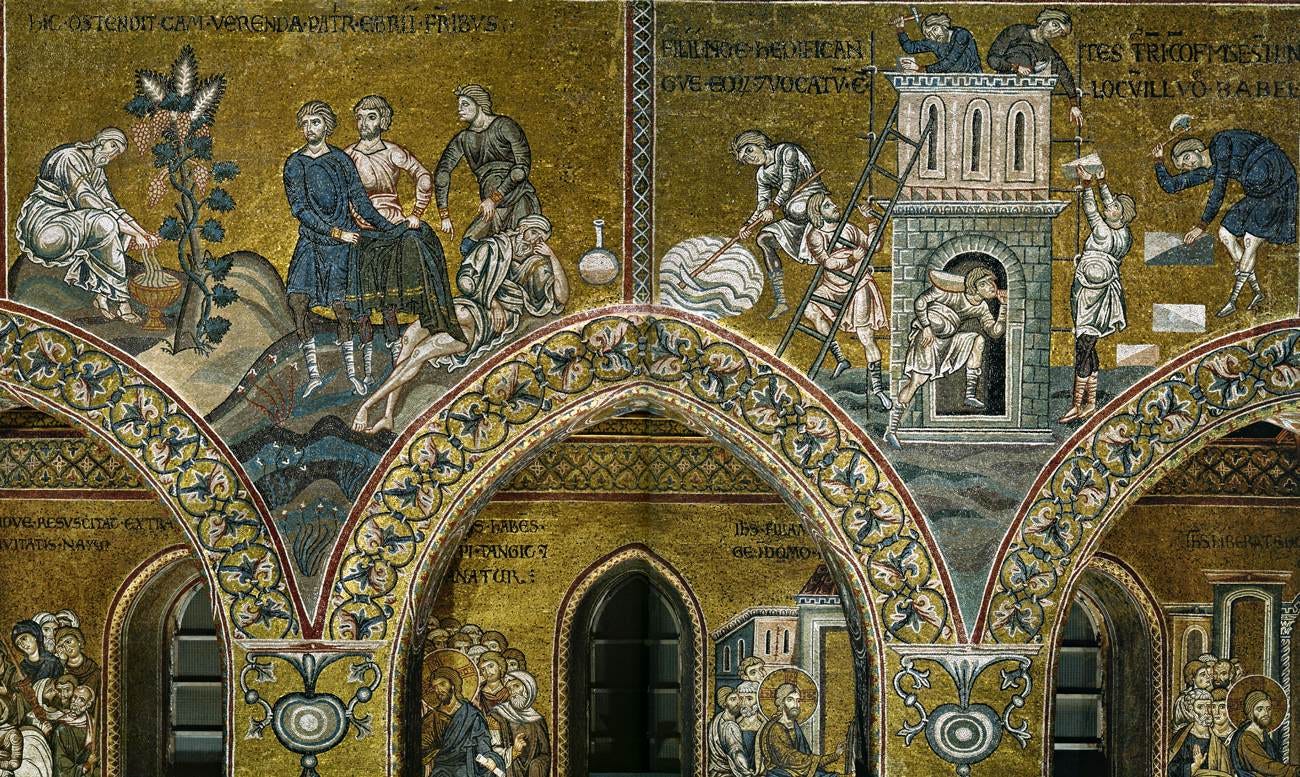
The Cathedral of Monreale in Sicily (12th century) is a Norman cathedral located near Palermo and houses one of the most comprehensive mosaic cycles of the Middle Ages.
The extensive mosaic cycle with biblical scenes covers more than 6,000 square meters and is among the greatest Byzantine mosaic creations outside Constantinople. The combination of Norman architecture with Byzantine mosaic techniques and Islamic decorative elements represents the unique cultural synthesis of Norman Sicily, a historical example from which ideas of understanding, appreciation, and inclusion may still be learned today.
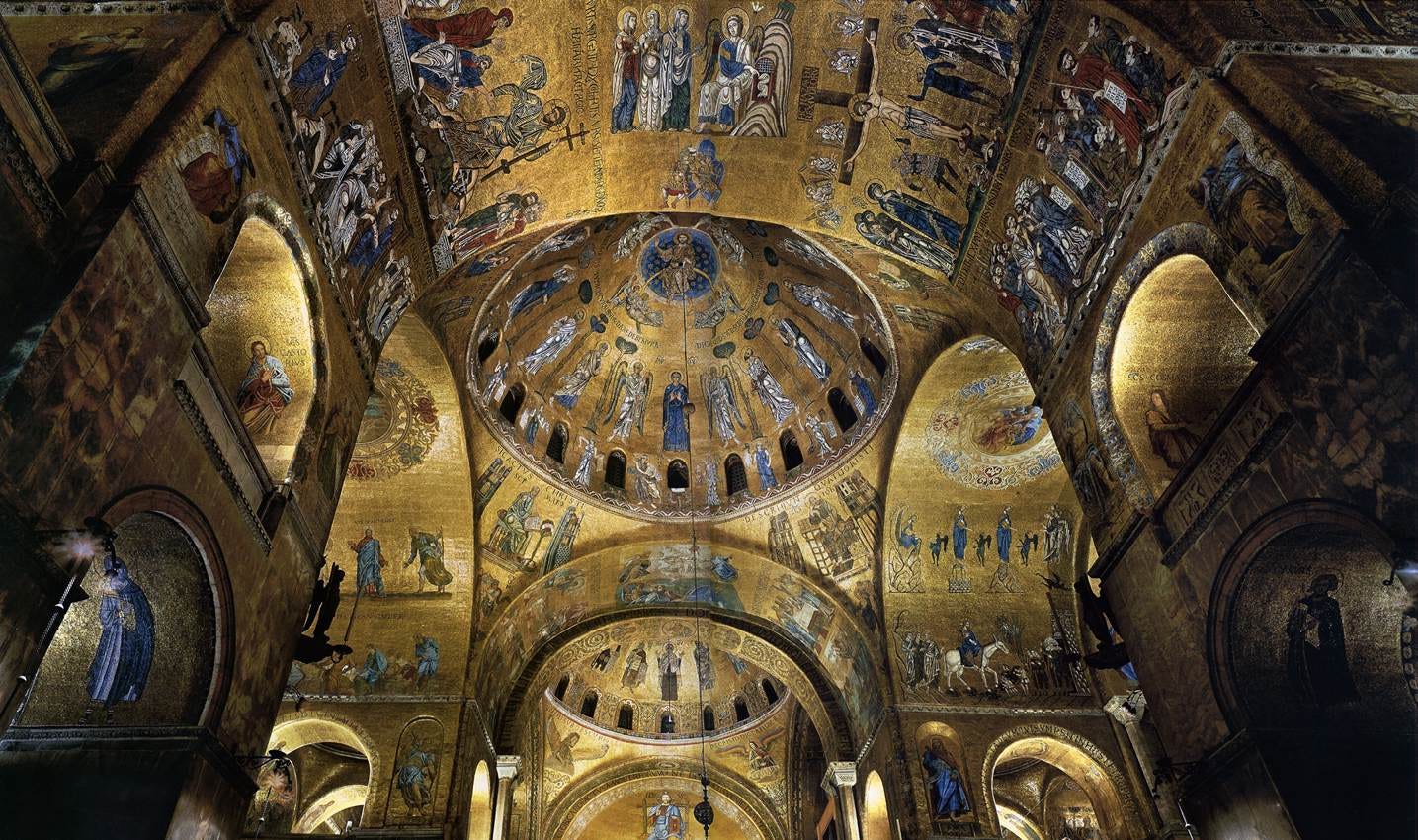
St. Mark’s Basilica in Venice is famous for its vast mosaic-covered church ceilings and extensive narrative cycles. Mosaic traditions survived in Venice into the modern era, while elsewhere in Italy they were largely replaced by fresco painting.
The ceiling mosaics cover more than 8,000 square meters and narrate biblical history from the Creation to the Last Judgment. The Venetian mosaic school developed its own stylistic language characterized by vivid coloration and narrative composition.
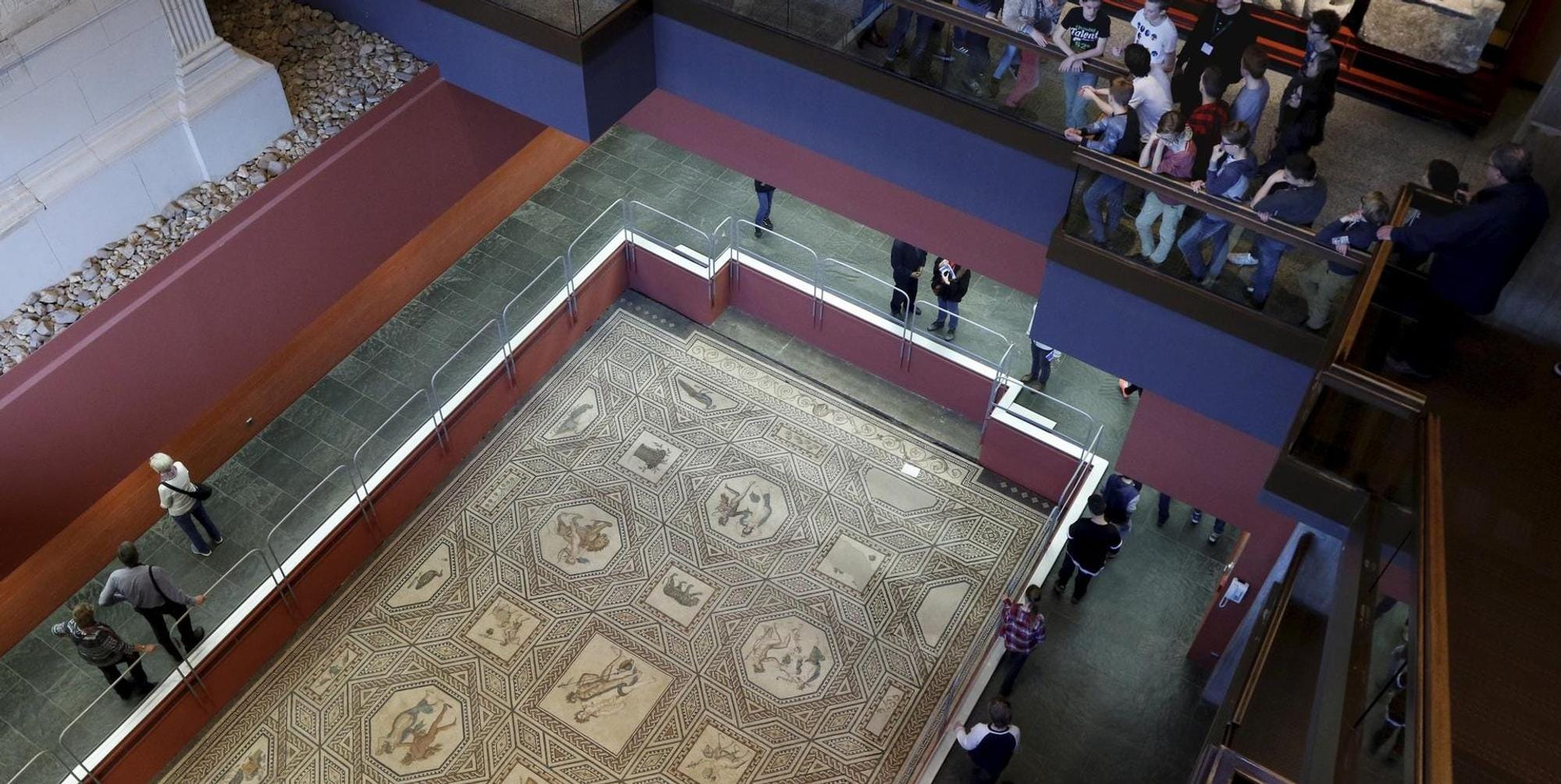
One of the most famous Roman mosaics in Germany is the Dionysus Mosaic in Cologne, discovered in 1941 during excavation works.
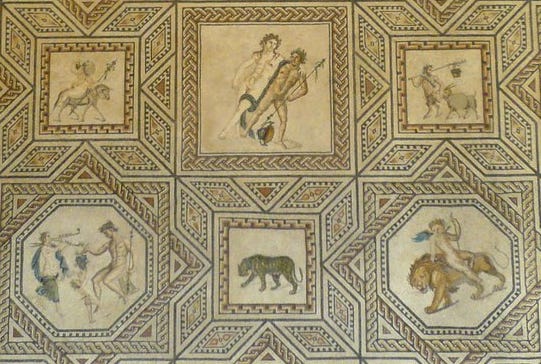
This well-preserved floor mosaic depicts Dionysus riding a panther and displays unusually rich colors and fine detail for a Roman mosaic found in Northern Europe. It demonstrates the expansion of Roman mosaic art into the Germanic provinces of the empire.
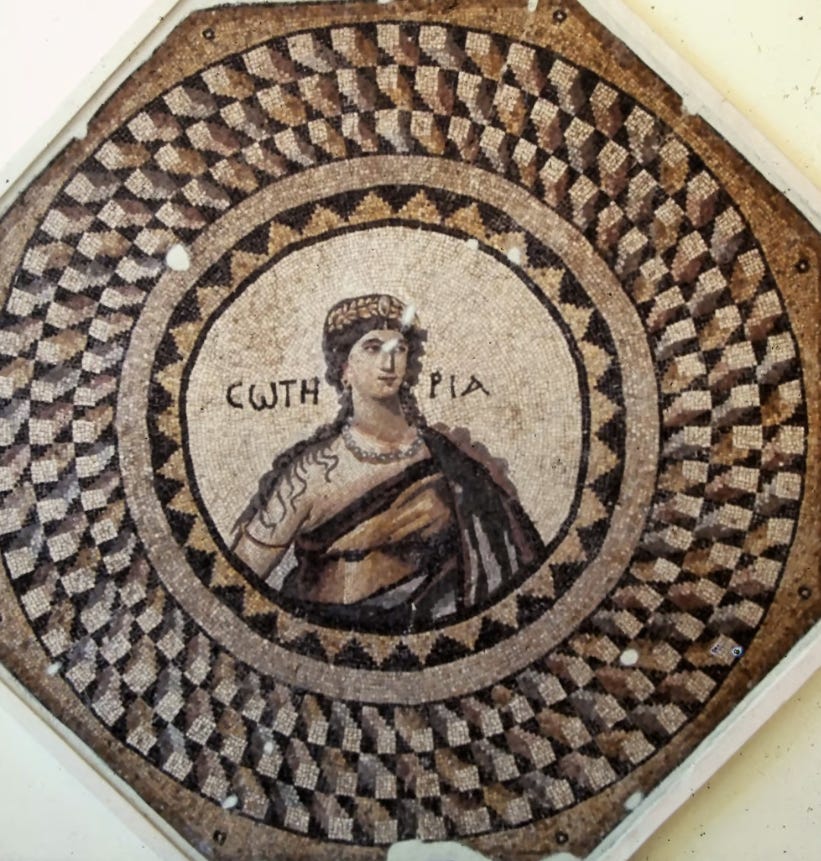
Antioch became a center for elaborate figurative floor mosaics. These sophisticated mosaic works depict scenes from daily life, hunting scenes, and mythological motifs with remarkable artistic quality and highly detailed compositions.
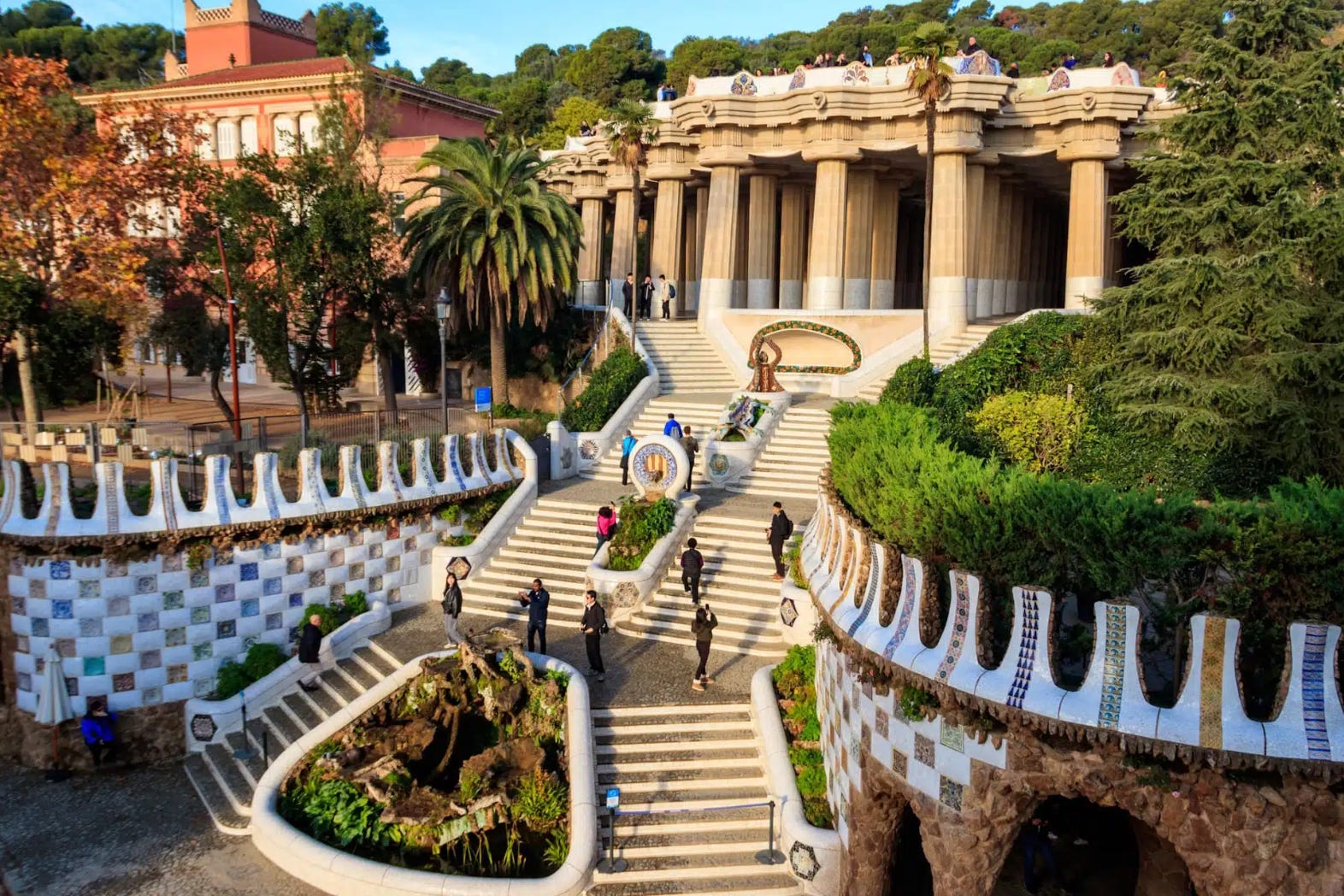
Moving closer to the modern era, we encounter what is perhaps the most famous representative of modern mosaic art. Antoni Gaudí (*25 June 1852 in Reus, possibly Riudoms; †10 June 1926 in Barcelona) integrated mosaics into the organic forms of his architecture, which itself emerged directly from artistic experimentation. Park Güell in Barcelona is now a UNESCO World Heritage Site. His legacy within urban and landscape architecture is not merely his own masterpiece, but also the achievement of an entire cultural environment that enabled his creative work.
Gaudí employed trencadís (broken ceramic fragments) and combined this traditional craft with the flowing freeform surfaces of transitional architectural space.
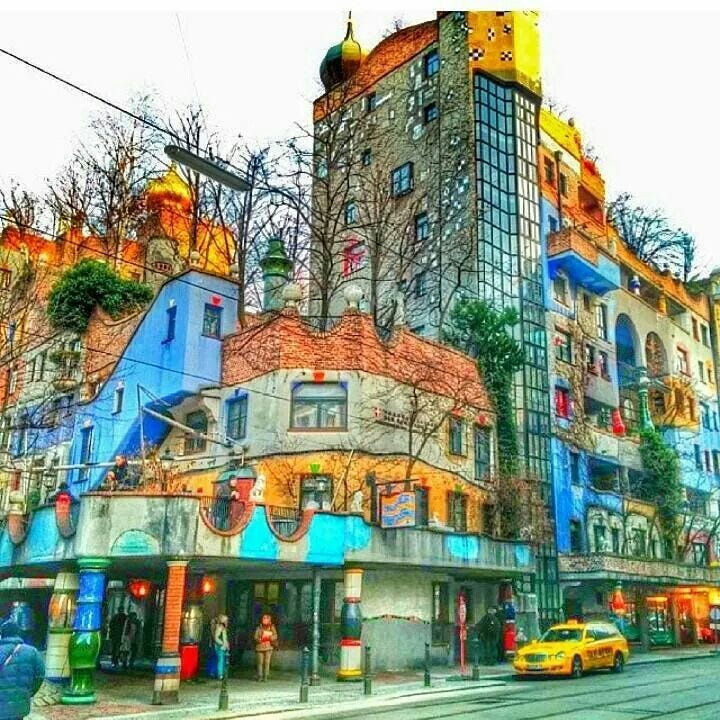
Somewhat later, the Hundertwasserhaus in Vienna emerged. It became known for translating painterly ideas into architectural facades through mosaic fragments.
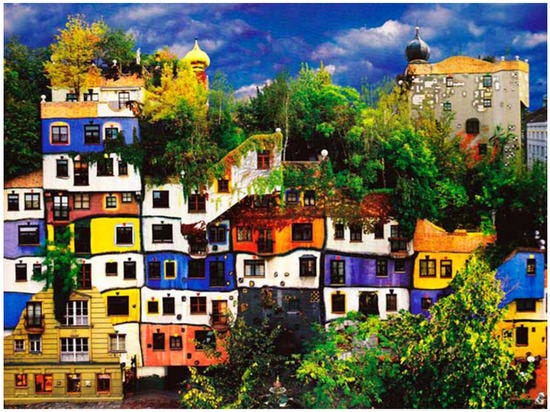
Friedensreich Hundertwasser developed his own mosaic aesthetic that united nature and architecture. The seemingly playful facade design represents Austrian modernism and its experimental spirit.
The most recent developments in European mosaic art reveal a continuous process of transformation.
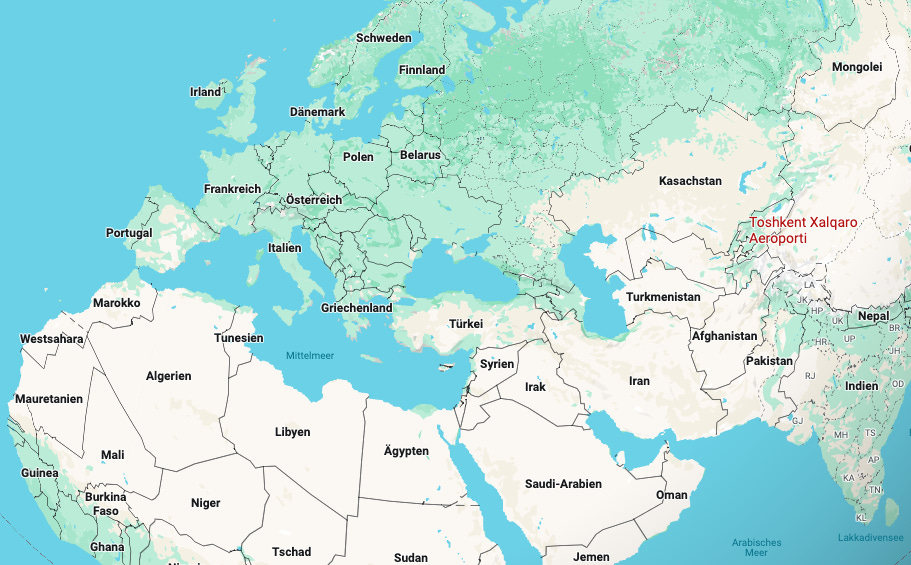
Yet the work of the Jarsky brothers in Soviet Tashkent understood artistic creation within a classical sense of cultural responsibility.
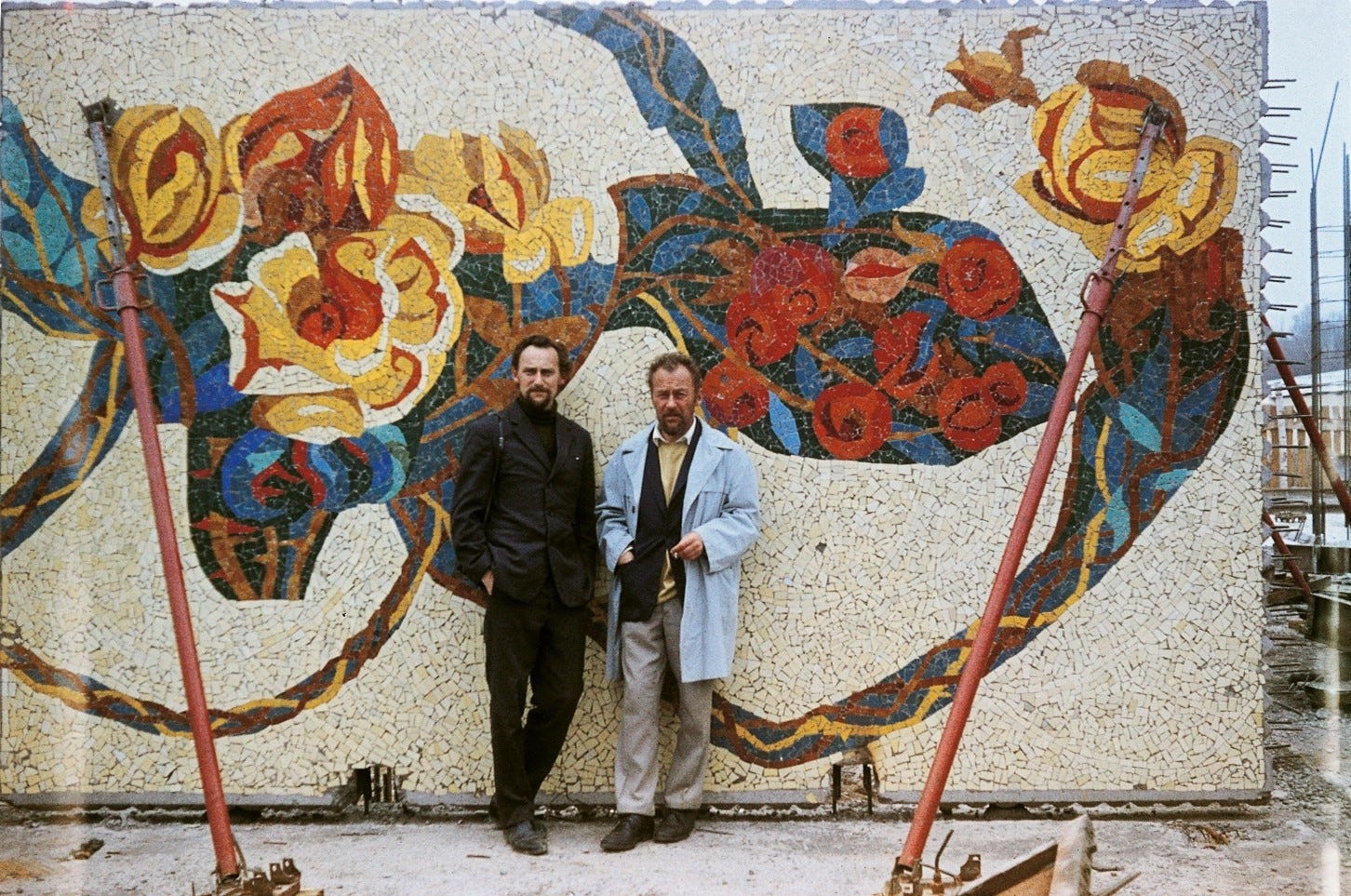
The three brothers designed colorful mosaic murals and expressive reliefs for more than 200 buildings in Uzbekistan, especially in Tashkent.
Working with mosaic tesserae derives its vitality from the material itself, because embedding the fragments expresses a unique process of foresight and ultimately a return to art itself.
Architecture has always belonged to the family of the arts, and mosaic art may offer one of its clearest proofs.
KB
Sources
Books, Essays, and Historical References
“Mosaic.” Wikipedia. Accessed May 27, 2026.
https://en.wikipedia.org/wiki/Mosaic
“Famous Mosaics: Discover Ancient Masterpieces to Modern Art.” Mosaik-Shop. Accessed May 27, 2026.
https://www.mosaik-shop.com/beruehmte-mosaike-der-geschichte
“History of Mosaic Art.” TIB Open Access Repository. Accessed May 27, 2026.
https://oa.tib.eu/renate/items/dad54681-0d39-4688-9df7-bfb91b30f401
“The Cultural History of Mosaic Art.” Monumente Online. Accessed May 27, 2026.
https://www.monumente-online.de/de/ausgaben/2020/6/Kulturgeschichte-Mosaik.php
“Mosaic History, Styles & Techniques — Expert Guide.” Mosaik-Shop Switzerland. Accessed May 27, 2026.
https://mosaik-shop.ch/mosaik-geschichte-stile-und-techniken
“The Origins and History of Mosaic Art.” Ambiente Mediterran. Accessed May 27, 2026.
https://www.ambiente-mediterran.de/mosaik-woher-stammt-geschichte/
“Mosaics in the Middle Ages.” Mediävistisches Institut, Universität Freiburg. Accessed May 27, 2026.
https://www.unifr.ch/mediaevum/de/studium/lehrveranstaltungen/course/107199
Historical Sites and Mosaic Heritage
“Alexander Mosaic.” National Archaeological Museum of Naples. Accessed May 27, 2026.
https://mann-napoli.it/en/opere/alexander-mosaic/
“Basilica of San Vitale, Ravenna.” UNESCO World Heritage Centre. Accessed May 27, 2026.
https://whc.unesco.org/en/list/788/
“Hagia Sophia.” UNESCO World Heritage Centre. Accessed May 27, 2026.
https://whc.unesco.org/en/list/356/
“Villa Romana del Casale.” UNESCO World Heritage Centre. Accessed May 27, 2026.
https://whc.unesco.org/en/list/832/
“Monreale Cathedral.” UNESCO World Heritage Centre. Accessed May 27, 2026.
https://whc.unesco.org/en/list/1487/
“St. Mark’s Basilica.” Basilica di San Marco. Accessed May 27, 2026.
https://www.basilicasanmarco.it/en/
“Dionysus Mosaic Cologne.” Römisch-Germanisches Museum Köln. Accessed May 27, 2026.
https://www.museenkoeln.de/roemisch-germanisches-museum/
Modern and Contemporary Mosaic Art
“Antoni Gaudí and Park Güell.” UNESCO World Heritage Centre. Accessed May 27, 2026.
https://whc.unesco.org/en/list/320/
“Hundertwasserhaus Vienna.” Hundertwasser Foundation. Accessed May 27, 2026.
https://www.hundertwasser.com/en/architecture/hundertwasserhaus
“Facade Art in Soviet Architecture.” Baulinks. Accessed May 27, 2026.
https://www.baulinks.de/webplugin/2023/1364.php4
“Dying Mosaics of Nature.” WWF Germany. Accessed May 27, 2026.
https://www.wwf.de/themen-projekte/waelder/sterbende-mosaike-der-natur